
Keratosis Pilaris: The Complete Guide

Keratosis pilaris, usually called KP, is a common skin condition that causes small, rough bumps, mostly on the upper arms, thighs, and butt. People often call it chicken skin. It's harmless and not contagious, and a lot of people have it without knowing its name.
What Keratosis Pilaris Is
Your skin makes keratin, a protein that helps protect it. With KP, extra keratin builds up and forms a small plug in the opening of each hair follicle. Each plug becomes a tiny bump. Together they create the rough, sandpaper feel KP is known for.
The bumps can be skin-colored, pink, red, or a little darker than the surrounding skin, depending on your skin tone. Some people also notice dryness or mild itching.
What Causes It
KP runs in families, and genetics is the biggest factor. It's more common in people with dry skin or eczema, and it often shows up in childhood or the teen years. For many people it eases with age.
Dry air makes it worse, which is why a lot of people notice it most in winter. Hot showers and harsh soaps that dry skin out can make it more noticeable too.
Where It Shows Up
The backs of the upper arms are the classic spot. Thighs and the butt come next, and some people get it on the cheeks of the face. On the butt, sitting, friction from clothing, and thicker skin all play a part. Our post on KP on your butt covers that area in detail.
KP or Something Else?
A few other things look similar. Folliculitis causes red or pus-filled bumps around follicles, often after sweating or shaving, and it can be tender. Strawberry skin is the dark-dot pattern from clogged follicles, and it often shows up alongside KP. Our strawberry skin guide explains the difference. If you aren't sure what you have, a dermatologist can tell you in one visit.
Daily Care for Rough, Bumpy Texture
KP doesn't go away for good. What helps is consistent care that keeps buildup and dryness in check.
Exfoliate a few times a week
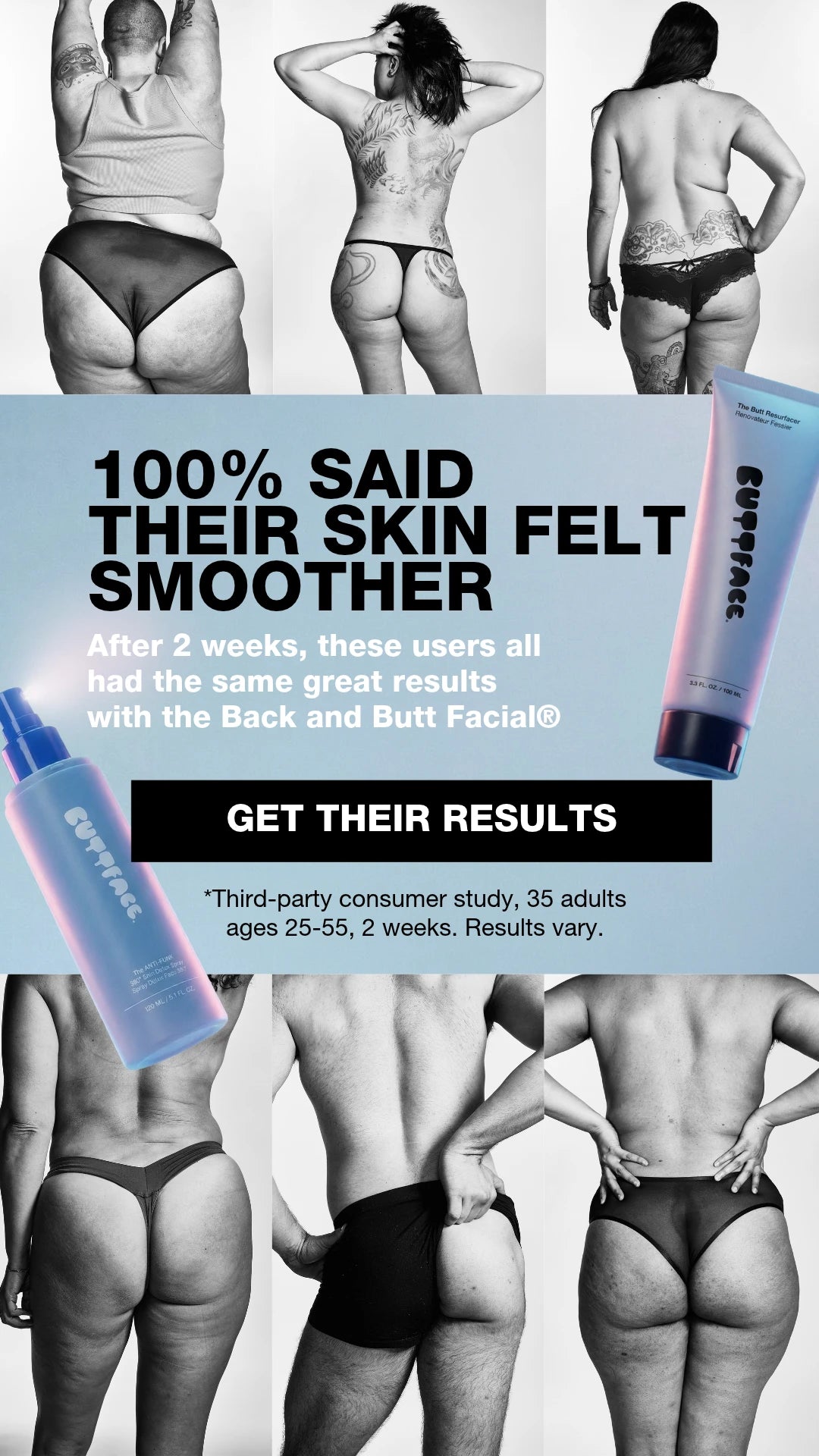
Exfoliating clears dead skin buildup from the surface. Two to three times a week is the right rhythm. The Butt Resurfacer uses super fine volcanic sand and cellulose beads to buff away rough buildup on the arms, thighs, and butt. 97% said skin felt smoother after the first scrub, and after 2 weeks, 91% said it reduced rough texture.*
Moisturize every day
Dry skin makes KP more noticeable, so moisture matters as much as exfoliation. Apply a moisturizer right after showering, while skin is still damp. The BBL Firming Cream is fragrance-free and leaves skin feeling hydrated: 100% said so after the first use.*
Keep showers warm, not hot
Hot water strips the oils that keep skin soft. Keep showers short and warm, and use a fragrance-free cleanser.
Add humidity in winter
A humidifier helps if your skin gets drier in cold months.
Don't pick
Picking or squeezing KP bumps irritates the skin and can leave marks behind.
What Dermatologists Often Suggest
For stubborn KP, dermatologists often recommend moisturizers with urea or lactic acid, which soften rough buildup. Prescription options exist for more noticeable cases. If your KP is itchy, inflamed, or bothering you, it's worth a visit.
Frequently Asked Questions
Does keratosis pilaris go away?
It often eases with age, especially after the twenties, but it can come and go for years. Consistent care keeps the texture smoother in the meantime.
Is KP contagious?
No. You can't catch it or spread it.
Is it the same as chicken skin?
Yes. Chicken skin is the everyday name for KP. Our post on what chicken skin is covers it from that angle.
Can I scrub it away?
Not permanently. Exfoliating smooths the surface, but the buildup returns when you stop. Scrubbing harder or more often irritates skin and makes things worse.
*Based on a 2-week consumer perception study of 35 adults ages 25 to 55 using The Butt Resurfacer and The BBL Firming Cream. Each result is credited to the product named. Results vary. This content is for education only and is not medical advice.
Related reading: Keratosis Pilaris Self-Care · KP on Your Butt · What Is Chicken Skin?
Shop Strawberry Skin · Rough Texture →